‘He spat’
I would give the first 75% of the book a 3/5, and the last 25% a 5/5.
Honestly, I am more torn on this review than any other I’ve made. I went into reading this thinking that it would be the perfect book for me. Although I can see why people would love it, it didn’t gel particularly well with me. I wasn’t much a fan of the constant descriptions of high pine trees, the desert landscape and the ‘blink and you miss it’ plot. It was extremely hard to follow and keep up with what was actually happening in places – although intentional from the author, it’s not something I revel in reading.
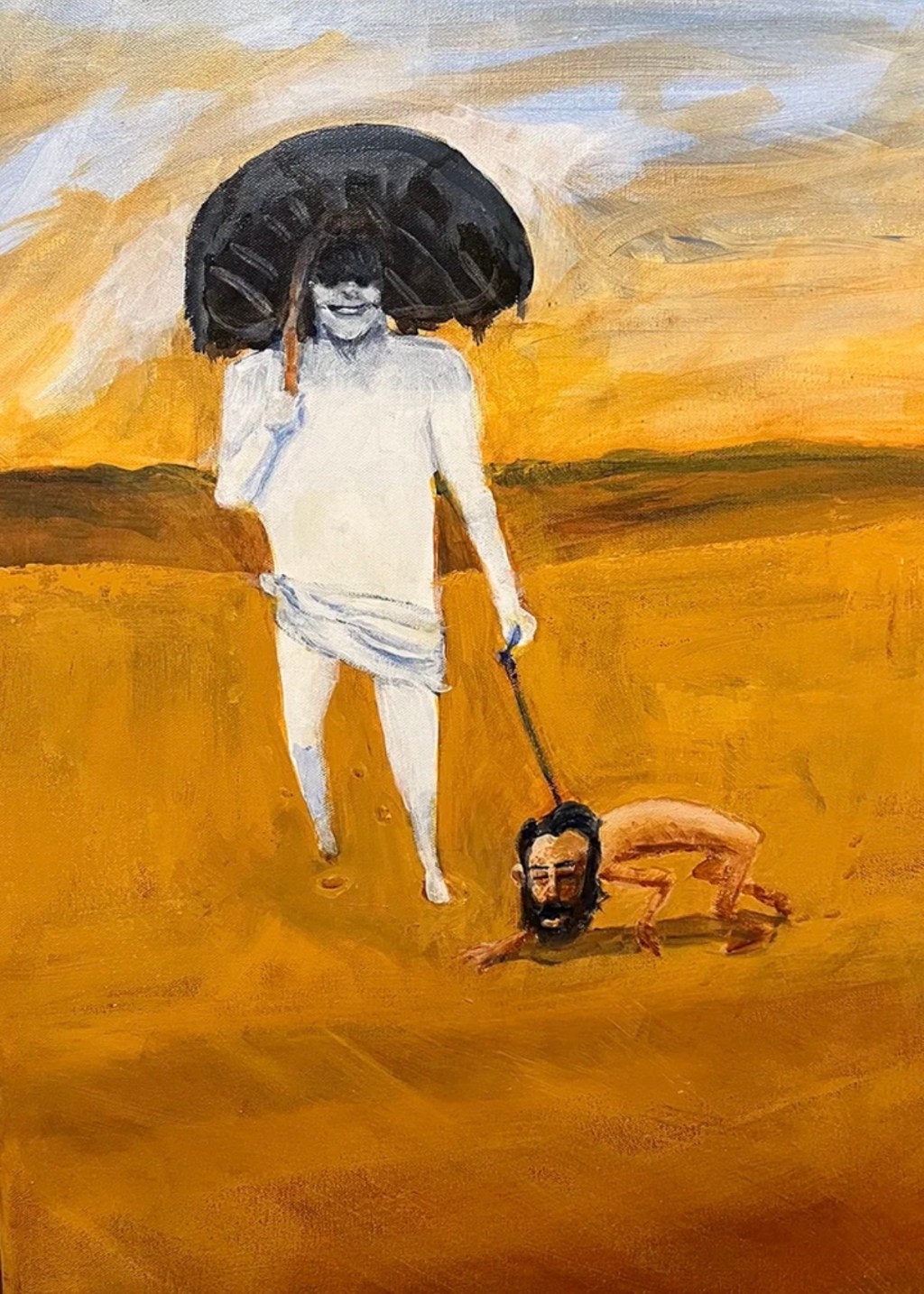
Judge Holden and the descriptions of him as an otherworldly, infantile behemoth as others have undoubtedly said, was extremely interesting. I felt like a member of the party during his philosophical rants, as I too, am too stupid to understand 50% of what he is saying. But nonetheless the raw brutality of his actions, and the enjoyment he took from them was horrifying. The book is especially interesting in how it hyper-fixates on the violence, but with a completely detached tone – mentionining the acts akin to passing remarks. It really trivialises the violence as an unchanging, natural part of life and shows the banality of evil, but for me – it doesn’t have the same impact. The part that hit me the hardest was during the final chapters of the book, where the performing bear is shot in the stomach and continues dancing despite his injury. This really was the epitome of human cruelty for me in the book, as the description of the event felt more vivid. Which is strange to say, in a book where people are being brutally murdered and scalped on a regular basis.
I feel it is too easy to look at Glanton as simply a sock-puppet carrying out The Judges desires, but he is much more than that. He is on par with The Judges with his brutality and total disregard for human life. Glanton seems to be fully aware of this and ‘complete’ in the knowledge that he will never change his ways. I see a lot of comments stating that The Judge is shown as a God of War, and Glanton his human instrument, carrying out his twisted vision of ‘World Order’ – but I do not see it this way. Glanton is to be feared just as much as The Judge, and Glanton has much more power to force others to bend to his will than The Judge does. The Judge is feared more due to his physical descriptions, and the fact that he goes against everything we see as ‘morally correct’ – how can a man so intelligent, charming and learned commit the most unspeakable acts of violence against others? Glanton is the opposite of this. He is the personification of raw, unflinching brutality with no rosy filter.
I’m self-aware enough to know that the trivialisation/normalisation of violence was fully intentional from the author, but it is just not something I particularly enjoy reading.
The ending sequence was certainly great, with the mystery of ‘The Judge’ still lingering with the reader.
Overall, a book that was hard to get through at certain points, but certainly rewarding at the end. I think upon reread I would give this a score of 4/5, but for now I can only reasonably give it 3/5 due to the absolute slog that most of the book represented.
“It makes no difference what men think of war, said the judge. War endures. As well ask men what they think of stone. War was always here. Before man was, war waited for him.”
“War was always here. Before man was, war waited for him. The ultimate trade awaiting its ultimate practitioner.”
Overall rating:
3/5.


Leave a comment